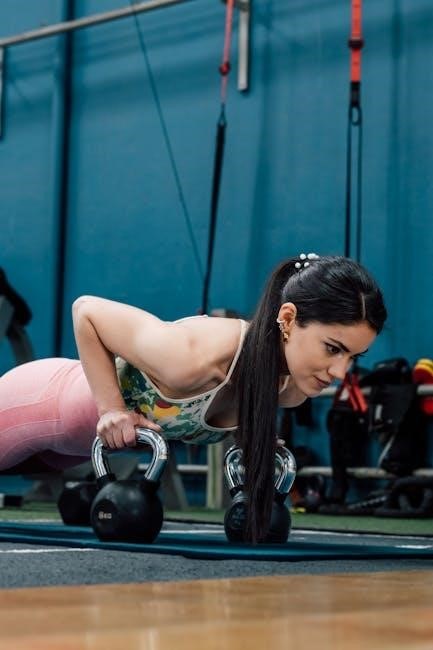
Kettlebell training offers a fantastic, full-body workout accessible to all fitness levels, and is a low-cost tool for strength and endurance gains, perfect for home or gym use․
What are Kettlebells?
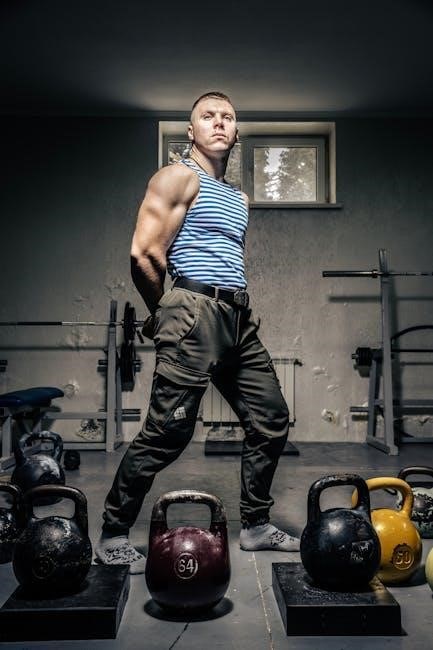
Kettlebells are cast iron or steel weights resembling a cannonball with a handle, differing significantly from traditional dumbbells․ Their unique offset center of gravity presents a dynamic challenge, engaging more muscles during exercises and improving functional strength․ Unlike dumbbells, kettlebells aren’t just about isolating muscle groups; they promote integrated movements․
This design allows for ballistic exercises like swings, snatches, and cleans, which build power, endurance, and cardiovascular fitness simultaneously․ They are incredibly versatile, suitable for beginners and advanced athletes alike․ A single kettlebell can facilitate a complete full-body workout, making them a space-efficient and cost-effective fitness solution․ Whether at home or in a gym setting, kettlebells offer a unique and effective training modality․
Benefits of Kettlebell Exercises
Kettlebell exercises deliver a multitude of benefits, extending beyond traditional strength training․ They enhance cardiovascular health, improving both muscular strength and endurance simultaneously – a true two-for-one workout! The dynamic nature of kettlebell movements boosts power development and athletic performance․
Furthermore, kettlebells improve core stability, posture, and flexibility․ Their unique movements require constant core engagement, leading to a stronger, more stable torso․ Integrating kettlebells with running can build necessary strength․ They are also incredibly time-efficient, offering a full-body workout in a shorter duration․ For women, they are excellent for total body strength, and are beginner-friendly, making them accessible to all fitness levels․
Choosing the Right Kettlebell Weight
Selecting the appropriate kettlebell weight is crucial for beginners to ensure proper form and prevent injuries․ Starting too heavy can compromise technique, while too light may not provide sufficient challenge․ Guides recommend beginners familiarize themselves with basic workout principles before increasing weight․
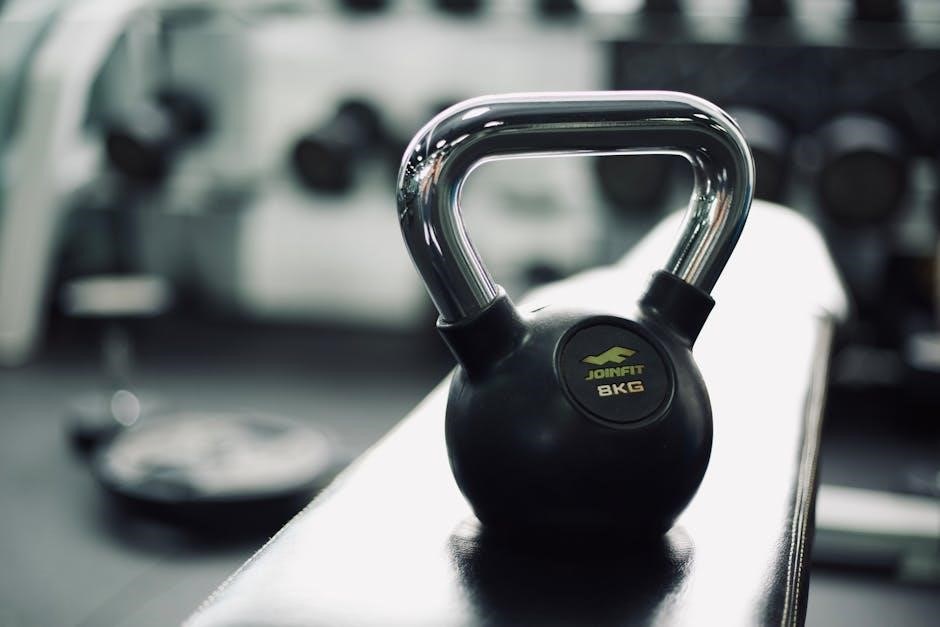
Generally, men might begin with a 12kg or 16kg kettlebell, while women often start with 8kg or 12kg․ However, individual strength levels vary significantly․ It’s better to err on the side of caution and start lighter․ Focus on mastering the fundamental movements – the swing and Turkish get-up – with good form before progressing․ Prioritize technique over weight; a controlled, correct movement is far more beneficial than a heavy, sloppy one․
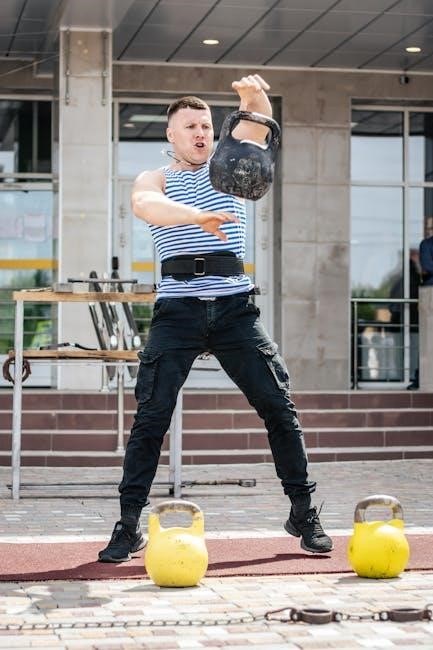
Fundamental Kettlebell Exercises
Mastering core movements like the swing, Turkish get-up, goblet squat, and deadlift builds a solid foundation for more advanced kettlebell techniques and overall fitness․
The Kettlebell Swing
The kettlebell swing is a dynamic, full-body exercise central to kettlebell training, enhancing both strength and cardiovascular fitness․ It’s a foundational movement, requiring proper technique for safety and effectiveness․ Beginners should focus on mastering the hip hinge – driving the swing from the glutes and hamstrings, not the arms․
Think of hiking the kettlebell back between your legs, then powerfully extending your hips forward to propel it upwards․ Maintain a neutral spine throughout the movement, avoiding rounding of the back․ The kettlebell should reach approximately chest height․
This exercise isn’t an arm raise; the arms act as guides․ Starting with a lighter weight is crucial to learn the correct form before progressing․ Consistent practice of the swing builds explosive power and endurance, preparing you for more complex kettlebell exercises․
Proper Swing Technique
Mastering the kettlebell swing demands precise technique․ Begin with feet shoulder-width apart, kettlebell slightly in front of you․ Hinge at the hips, keeping your back straight and core engaged, reaching for the kettlebell․ Grip it firmly, maintaining a neutral spine․
Initiate the swing by powerfully driving your hips forward, squeezing your glutes, and extending your legs․ The kettlebell will naturally rise to chest height․ Avoid actively lifting with your arms; they should remain relaxed and guide the kettlebell․
As the kettlebell descends, hinge back at the hips, absorbing the momentum․ Repeat the movement fluidly, focusing on the hip drive․ Keep your gaze forward and maintain a tight core throughout․ Prioritize form over weight – a lighter kettlebell with perfect technique is far more effective than a heavier one with poor form․
The Turkish Get-Up
The Turkish Get-Up (TGU) is a complex, full-body exercise building strength, stability, and coordination․ Starting lying on your back, extend one arm holding the kettlebell straight up towards the ceiling․ Bend your opposite leg, foot flat on the floor․
Drive through your bent leg and push up onto your opposite hand, extending your hips․ Roll onto your shoulder, maintaining the kettlebell’s position․ Press up into a lunge position, keeping your core engaged and back straight․
From the lunge, sweep your other leg through and stand up, still holding the kettlebell overhead․ Reverse the steps to return to the starting position․ This exercise requires control and focus; start with a very light weight or no weight at all to master the movement pattern․
Step-by-Step Guide to Turkish Get-Up
Step 1: Lie on your back, knees bent, feet flat․ Hold the kettlebell in your right hand, arm extended towards the ceiling, keeping your wrist straight․
Step 2: Press the kettlebell upwards while simultaneously driving through your right heel to lift your hips off the ground․
Step 3: Roll onto your left forearm, maintaining the kettlebell’s position․ Keep your eyes fixed on the weight․
Step 4: Push up onto your left hand, extending your arm․ Sweep your left leg back, creating a lunge position․
Step 5: Drive through your front foot and stand up, bringing your right foot forward to stand tall with the kettlebell overhead․ Reverse the steps to return to the starting position․
The Kettlebell Goblet Squat
The Kettlebell Goblet Squat is an excellent beginner exercise, focusing on proper squat form and building lower body strength․ Hold the kettlebell vertically against your chest, close to your body – this ‘goblet’ position aids balance and encourages an upright torso․
Stand with feet slightly wider than shoulder-width apart, toes pointed slightly outward․ Keeping your back straight and core engaged, descend into a squat, pushing your hips back and down as if sitting in a chair․
Ensure your knees track in line with your toes and don’t extend past them․ Lower yourself until your thighs are parallel to the ground, or as low as comfortably possible․ Drive through your heels to return to the starting position, maintaining control throughout the movement․
Form and Execution of Goblet Squats
Proper form is crucial for maximizing benefits and preventing injury during goblet squats․ Begin by holding the kettlebell close to your chest, maintaining a firm grip․ Initiate the movement by hinging at the hips, pushing your glutes backward, and keeping your chest up and core braced․
As you descend, ensure your elbows track inside your knees, promoting proper alignment․ Maintain a neutral spine – avoid rounding your back or excessively arching it․ Your knees should track in line with your toes, never collapsing inward․
Drive through your heels to stand back up, squeezing your glutes at the top of the movement․ Focus on controlled movements throughout the entire exercise, avoiding rushing or using momentum․ Prioritize depth and form over the weight used․
The Kettlebell Deadlift
The kettlebell deadlift is a foundational exercise building posterior chain strength․ Start with the kettlebell positioned slightly in front of your feet․ Hinge at your hips, keeping your back straight and core engaged, to reach down and grasp the kettlebell with both hands․
Maintain a neutral spine throughout the movement – avoid rounding your back․ Your shoulders should be pulled back and down․ Drive through your heels, keeping your back straight, to lift the kettlebell off the ground; Focus on using your glutes and hamstrings to power the lift․
Avoid hyperextending your back at the top of the movement․ Slowly lower the kettlebell back to the ground, maintaining control and proper form․ Prioritize technique over weight to prevent injury․
Maintaining Correct Form During Deadlifts
Prioritizing form during kettlebell deadlifts is crucial for preventing injury and maximizing effectiveness․ Keep your spine neutral – a natural curve is good, but avoid rounding or excessive arching․ Engage your core throughout the entire movement to stabilize your torso․
Shoulders should be pulled back and down, not shrugged towards your ears․ Maintain a slight bend in your knees; don’t lock them out․ Drive through your heels, focusing on activating your glutes and hamstrings to initiate the lift․ The kettlebell should stay close to your body throughout the exercise․
Avoid jerking or using momentum to lift the weight․ Slow, controlled movements are key․ If you feel any strain in your lower back, stop immediately and reassess your form․
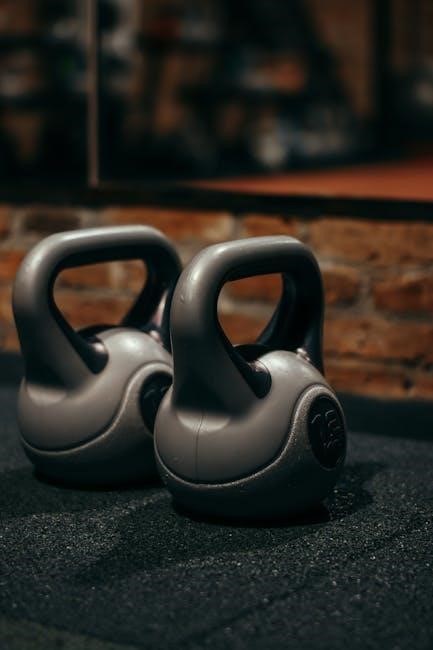
Beginner Kettlebell Workout Routines
Structured routines, like a 12-week program, progressively build strength and endurance, starting with mastering swings and Turkish get-ups for foundational success․
12-Week Kettlebell Training Program Overview
This comprehensive program is thoughtfully divided into three distinct phases, each building upon the previous one to maximize your results and minimize the risk of injury․ Phase 1, spanning the initial weeks, concentrates intensely on mastering the fundamental movements – specifically, the kettlebell swing and the challenging yet rewarding Turkish get-up․ These exercises are performed twice weekly, emphasizing proper form and technique over sheer weight or repetitions․
As you progress, Phase 2 shifts the focus towards building both strength and endurance․ Workouts become more varied, incorporating additional kettlebell exercises to target different muscle groups․ The frequency may increase slightly, preparing your body for the demands of the final phase․ Finally, Phase 3 introduces more advanced kettlebell techniques, challenging your coordination, power, and overall fitness level․ This structured approach ensures a safe and effective journey towards kettlebell proficiency․
Phase 1: Mastering the Swing and Turkish Get-Up
The initial four weeks of your kettlebell journey are dedicated to building a solid foundation with two cornerstone exercises: the kettlebell swing and the Turkish get-up․ Prioritize impeccable form over lifting heavy weights; this phase is about learning movement patterns․ Focus on performing these exercises two times per week, allowing adequate recovery between sessions․
The kettlebell swing teaches proper hip hinge mechanics and explosive power, while the Turkish get-up develops full-body coordination, stability, and strength․ Break down the Turkish get-up into smaller, manageable steps, focusing on control throughout each transition․ Consistency is key during this phase – aim for quality repetitions with perfect technique to establish a safe and effective training base for future progression․
Phase 2: Building Strength and Endurance
Weeks five through eight shift the focus towards building both strength and endurance․ Now that you’ve mastered the swing and Turkish get-up, it’s time to introduce additional exercises and increase training frequency․ Incorporate the goblet squat and kettlebell deadlift into your routine, performing them two to three times weekly․
Gradually increase the weight you’re lifting, ensuring you maintain proper form throughout each exercise․ Introduce simple kettlebell circuits, combining multiple exercises with minimal rest, to challenge your cardiovascular system and build muscular endurance․ Remember to prioritize controlled movements and listen to your body, adjusting the weight or volume as needed․ This phase aims to solidify your technique while progressively overloading your muscles․
Phase 3: Advanced Kettlebell Techniques

Weeks nine through twelve introduce more complex movements to further challenge your strength, power, and coordination․ This phase is ideal for integrating exercises like the kettlebell thruster – a dynamic combination of a squat and overhead press – into your workouts․ Explore variations of the swing, such as single-arm swings, to increase the demand on your core and stability․
Focus on integrating kettlebells into core workouts, utilizing exercises that require anti-rotation and anti-extension․ Continue to progressively overload by increasing weight, reps, or sets․ Remember to maintain impeccable form to prevent injury․ This phase builds upon the foundation established in the previous phases, pushing your limits and unlocking new levels of kettlebell proficiency․
Full Body Kettlebell Workouts
Kettlebells provide versatile exercises for total body strength, complementing running training by building crucial muscle and endurance, enhancing overall fitness and performance․
Kettlebell Exercises for Total Body Strength
Kettlebell workouts are incredibly efficient for building comprehensive strength, engaging multiple muscle groups simultaneously with each movement․ For beginners, focusing on foundational exercises is key to establishing proper form and preventing injury․
Exercises like the kettlebell swing, goblet squat, and Turkish get-up are excellent starting points․ The swing powerfully targets the posterior chain – glutes, hamstrings, and back – while the goblet squat builds leg and core strength․ The Turkish get-up, though complex, enhances stability, coordination, and full-body control․
These movements aren’t isolated; they demand core engagement throughout, improving stability and functional strength․ Integrating these exercises into a routine, even with lighter weights, will quickly build a solid foundation for more advanced kettlebell techniques․ Remember to prioritize technique over weight, ensuring each repetition is performed with precision and control․
Combining Kettlebells with Running Training
Runners often focus solely on cardiovascular endurance, neglecting crucial strength training components․ Integrating kettlebell exercises can significantly enhance running performance and reduce injury risk by addressing muscle imbalances and building overall strength․
Kettlebell swings improve posterior chain power, directly translating to a more efficient stride․ Goblet squats and deadlifts strengthen legs and core, providing stability and preventing form breakdown during longer runs․ These exercises build the muscular endurance needed to maintain proper form when fatigue sets in․
A balanced approach – incorporating 2-3 kettlebell sessions per week alongside your running schedule – yields optimal results․ Prioritize exercises that complement running mechanics, focusing on glute activation, core stability, and leg strength․ Remember to listen to your body and adjust intensity accordingly․

Advanced Kettlebell Movements
Progressing beyond foundational exercises, advanced techniques like the thruster and integrating kettlebells into core work demand greater strength, coordination, and control․
The Kettlebell Thruster (Dumbbell Squat to Press)
The kettlebell thruster is a dynamic, full-body compound exercise that seamlessly blends a front squat with an overhead press․ Starting in a standing position, hold the kettlebell close to your chest․ Descend into a front squat, maintaining a straight back and keeping your core engaged․ As you return to a standing position from the squat, explosively press the kettlebell overhead, fully extending your arms․
This movement requires significant coordination and strength, working muscles throughout your legs, glutes, core, shoulders, and arms․ It’s a fantastic exercise for building power, endurance, and overall athleticism․ Proper form is crucial to avoid injury; focus on controlled movements and maintain a tight core throughout the entire exercise․ The thruster can be modified with lighter weights initially, gradually increasing the load as strength improves․
Integrating Kettlebells into Core Workouts
Kettlebells are incredibly versatile for enhancing core workouts, offering a unique challenge beyond traditional exercises․ Their offset weight demands greater stabilization, forcing your core muscles to work harder throughout each movement․ Simple exercises like kettlebell windmills, Russian twists with a kettlebell, and farmer’s carries effectively target obliques, rectus abdominis, and lower back muscles․
Even incorporating a kettlebell during basic planks or glute bridges increases the intensity and engagement of your core․ Remember to prioritize proper form and controlled movements; start with lighter weights and focus on maintaining a stable spine․ Kettlebells add variety and effectiveness to core routines, promoting functional strength and improved stability for everyday activities․
Safety and Considerations
Prioritize proper warm-up and cool-down routines, focusing on dynamic stretching before and static stretching after workouts, to prevent injuries and maximize results․
Warm-up and Cool-down Routines
Before each kettlebell session, a dynamic warm-up is crucial to prepare your muscles and joints for movement․ Include exercises like arm circles, leg swings, torso twists, and bodyweight squats – performing each for approximately 30-60 seconds․ This increases blood flow and range of motion, reducing injury risk․
Following your workout, a cool-down is equally important․ Static stretches, held for 20-30 seconds each, help improve flexibility and reduce muscle soreness․ Focus on stretching major muscle groups worked during the session, such as hamstrings, glutes, shoulders, and back․
Remember to listen to your body and adjust the intensity and duration of warm-up and cool-down routines as needed․ Consistent implementation of these routines will significantly enhance your kettlebell training experience and promote long-term fitness․
Frequently Asked Questions About Kettlebell Training
Many beginners wonder about selecting the right kettlebell weight; starting lighter is always recommended to master proper form before increasing the challenge․ Another common question concerns workout frequency – 2-3 sessions per week is a good starting point, allowing for adequate recovery․
Is kettlebell training suitable for all fitness levels? Absolutely! Exercises can be modified to accommodate different abilities․ Concerns about space are also frequent; a relatively small area is sufficient for most kettlebell movements․
Finally, people often ask about combining kettlebells with other exercises․ Integrating them with running or core work is highly effective for a well-rounded fitness routine․ Prioritize form over weight, and don’t hesitate to seek guidance from a qualified instructor․