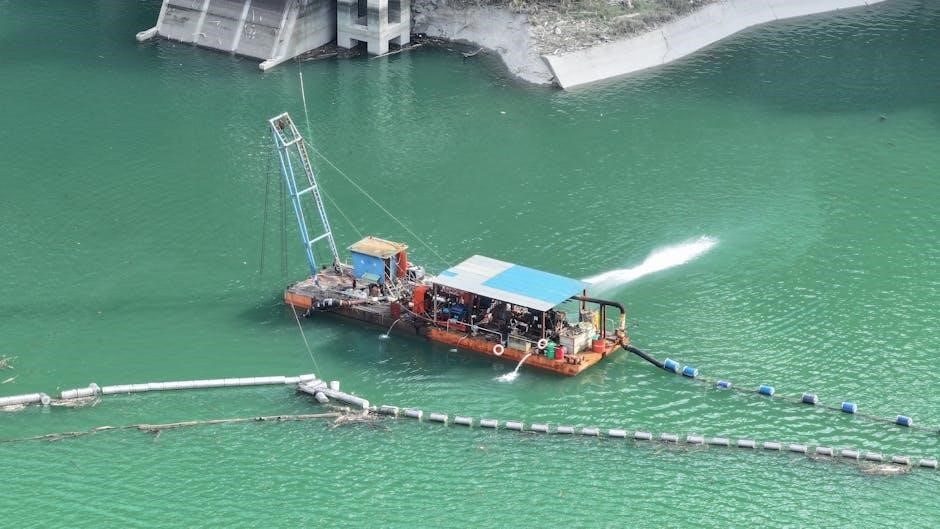
This manual establishes requirements and standards for designing surface and stormwater systems within King County, mitigating impacts from development and redevelopment projects.
It guides professionals in protecting natural drainage systems and existing infrastructure, ensuring responsible water management practices are consistently applied.
Purpose and Scope of the Manual
The King County Surface Water Design Manual serves as a comprehensive guide for professionals involved in stormwater management and surface water design. Its primary purpose is to establish consistent, technically sound standards for managing stormwater runoff from new development and redevelopment activities. This ensures the protection of valuable surface water resources throughout King County.
The scope of this manual encompasses the entire lifecycle of stormwater management, from initial site assessment and planning through design, construction, and long-term maintenance. It addresses both quantity and quality control, aiming to mitigate impacts on natural drainage systems and existing infrastructure. The manual’s guidelines apply to a wide range of projects, including residential, commercial, and industrial developments, as well as public works projects.
History and Updates (Including February 2010 & 2024 Amendments)
The King County Surface Water Design Manual has evolved over time to incorporate advancements in stormwater management practices and address changing regulatory requirements. A significant update occurred with the February 2010 amendments, which included revisions to conveyance system design and water quality treatment standards. These changes reflected a growing understanding of best management practices (BMPs).
More recently, the manual underwent further revisions with the 2024 amendments, building upon the 2021 edition. These updates reflect ongoing research and development in the field, as well as community input and feedback. Cities like Renton have also implemented minor, localized amendments to Chapters 5 and 6, tailoring the manual to specific local conditions while maintaining overall consistency with King County standards.

Chapter 5: Conveyance System Analysis and Design
This chapter details the analysis and design of conveyance systems, including pipe networks and channels, crucial for managing stormwater runoff effectively within King County.
Overview of Conveyance System Design
Conveyance system design focuses on efficiently and safely transporting stormwater runoff from the point of generation to designated discharge locations. This involves a comprehensive understanding of hydrological principles, hydraulic performance, and appropriate material selection. Key considerations include minimizing erosion, preventing flooding, and protecting water quality.
Effective design necessitates accurate estimations of peak flow rates, careful layout of conveyance elements – such as pipes, ditches, and swales – and proper sizing to accommodate anticipated flows. The King County Surface Water Design Manual emphasizes integrated approaches, considering both natural and engineered systems. Furthermore, the manual promotes designs that mimic natural drainage patterns, enhancing ecological function and reducing environmental impacts; Careful planning and analysis are essential for robust and sustainable stormwater management.
Hydraulic Analysis Methods
The King County Surface Water Design Manual details several hydraulic analysis methods for accurately assessing conveyance system performance. These range from simplified techniques, suitable for preliminary design, to complex computer modeling approaches for intricate systems. Rational Method calculations are commonly used for smaller drainage areas, while more sophisticated models, like those utilizing HEC-RAS, are employed for larger, complex networks.
Proper selection of the analysis method depends on the project’s scale, complexity, and required level of accuracy. The manual emphasizes the importance of considering factors like flow velocity, energy losses, and hydraulic grade line to ensure adequate capacity and prevent backwater effects. Detailed guidance is provided on applying these methods, ensuring consistent and reliable results for all stormwater management projects.
Pipe Network Design Considerations
Designing effective pipe networks requires careful consideration of several key factors, as outlined in the King County Surface Water Design Manual. Proper pipe sizing is crucial to accommodate anticipated flows, preventing surcharging and ensuring adequate conveyance capacity. Material selection must account for soil conditions, loading, and long-term durability, with options ranging from concrete to plastic.
The manual stresses the importance of minimizing headloss through optimized pipe layouts and appropriate joint selection. Designers must also address potential issues like sediment deposition and maintenance access. Furthermore, considerations for inlet and outlet structures, as well as protection against erosion and scour, are essential for a robust and reliable stormwater conveyance system.
Channel Design Principles
The King County Surface Water Design Manual emphasizes natural channel design principles to mimic natural hydrology and geomorphology. Stable channel geometry is paramount, achieved through appropriate bank slopes, cross-sectional shape, and alignment. Vegetation plays a vital role in stabilizing banks, reducing erosion, and enhancing water quality.
Designers must carefully analyze flow velocities to prevent scour and ensure long-term channel stability. Consideration of sediment transport is crucial, avoiding both aggradation and degradation. The manual promotes the use of bioengineering techniques, such as vegetated swales and riffle-pool sequences, to create self-sustaining and ecologically functional channels. Properly designed channels integrate seamlessly with the surrounding landscape.
City of Renton Amendments to Chapter 5
The City of Renton has implemented minor, specific changes to Chapter 5 – Conveyance System Analysis and Design – of the King County Surface Water Design Manual. These amendments provide replacement text for sections within the chapter that require localized adjustments to align with Renton’s specific conditions and regulations.
It’s important to note that, aside from these designated modifications, the entirety of Chapter 5 remains fully applicable to proposed projects within the City of Renton. Designers should carefully review the amendment document to identify and incorporate the revised text into their conveyance system designs. These changes ensure projects meet both county-wide and city-specific stormwater management standards.

Chapter 6: Water Quality Design
This chapter details stormwater quality treatment objectives and outlines the selection and design standards for Best Management Practices (BMPs) within King County.
Stormwater Quality Treatment Objectives
The primary goal of stormwater quality treatment, as outlined in the King County Surface Water Design Manual, is to protect and restore the health of local water bodies. This is achieved by minimizing the discharge of pollutants from new development and redevelopment activities.
Specific objectives focus on reducing sediment loads, controlling runoff volumes, and targeting key pollutants like phosphorus, heavy metals, and oil. These efforts aim to maintain or improve water quality conditions, supporting aquatic life and recreational uses.
Treatment requirements are tailored to the specific land use and potential pollutant sources, ensuring effective and efficient stormwater management practices are implemented throughout King County.
Best Management Practices (BMPs) Selection
Selecting appropriate Best Management Practices (BMPs) is crucial for achieving stormwater quality treatment objectives within the King County Surface Water Design Manual framework. The manual provides a comprehensive list of BMPs, categorized by their ability to address specific pollutants and site conditions.
Factors influencing BMP selection include site constraints, runoff characteristics, cost-effectiveness, and long-term maintenance requirements. Designers are encouraged to utilize an integrated approach, combining multiple BMPs to maximize pollutant removal efficiency.
The manual emphasizes source control measures, such as minimizing impervious surfaces and implementing erosion control techniques, alongside treatment BMPs like bioretention facilities and detention ponds.
BMP Design Standards
The King County Surface Water Design Manual outlines detailed design standards for each approved Best Management Practice (BMP). These standards ensure consistent performance and effective pollutant removal across various projects within the county.
Design specifications cover aspects like sizing criteria, material requirements, construction details, and maintenance protocols. Hydraulic calculations, vegetation selection, and soil composition are also addressed to optimize BMP functionality.
Adherence to these standards is essential for obtaining project approval and ensuring long-term stormwater management success. The manual provides guidance on quality control during construction and ongoing monitoring to verify BMP effectiveness.
City of Renton Amendments to Chapter 6
The City of Renton has implemented minor amendments to Chapter 6 of the King County Surface Water Design Manual, specifically concerning Water Quality Design. These changes refine the county-wide standards to better address local conditions and stormwater management priorities within Renton.
The amendments provide replacement text for specific sections within Chapter 6, clarifying requirements and ensuring alignment with Renton’s overall drainage objectives. These modifications do not fundamentally alter the core principles of the manual.
Professionals working on projects in Renton must consult both the King County Manual and these supplemental amendments to ensure full compliance. Apart from these changes, Chapter 6 remains applicable.

Stormwater Management Requirements
These requirements address new development and redevelopment, aiming to mitigate impacts on drainage systems and protect surface water quality throughout King County.
New Development and Redevelopment Standards
King County’s standards for new development and redevelopment prioritize minimizing stormwater runoff and maintaining the natural hydrologic processes of the region. These standards encompass a comprehensive approach, requiring developers to implement Best Management Practices (BMPs) tailored to site-specific conditions.
Emphasis is placed on source control measures – reducing pollution at its origin – alongside structural BMPs designed to treat stormwater before it enters receiving waters. Compliance necessitates detailed site assessments, hydraulic calculations, and adherence to specific design criteria outlined within the Surface Water Design Manual.
Redevelopment projects are also subject to these standards, often with a focus on correcting existing drainage deficiencies and improving water quality. The goal is to ensure that all development contributes to the long-term health of King County’s water resources.
Mitigation of Impacts on Drainage Systems
The King County Surface Water Design Manual stresses mitigating impacts on both natural and man-made drainage systems. Development often increases impervious surfaces, leading to higher runoff volumes and velocities, potentially causing erosion and flooding.
Mitigation strategies include on-site detention and infiltration facilities, designed to mimic pre-development hydrologic conditions. These systems slow down runoff, allowing for groundwater recharge and reducing peak flows to downstream areas.
Careful consideration must be given to the capacity of existing infrastructure, ensuring that new development doesn’t overload existing systems. Detailed analysis and appropriate BMP selection are crucial for protecting downstream properties and maintaining the functionality of King County’s drainage network.
Surface Water Quality Protection
The King County Surface Water Design Manual prioritizes protecting surface water quality through rigorous stormwater management practices. Runoff from developed areas often carries pollutants like sediment, oil, heavy metals, and pathogens, harming aquatic ecosystems and potentially impacting drinking water sources.
The manual outlines specific stormwater quality treatment objectives, requiring the implementation of Best Management Practices (BMPs) to remove pollutants before discharge. These BMPs range from source control measures, like minimizing exposed soils, to treatment facilities like bioretention cells and detention ponds.
Proper BMP selection and design are critical, ensuring effective pollutant removal and compliance with water quality standards. Ongoing maintenance of these systems is also essential for long-term performance and continued protection of King County’s valuable water resources.

Morphometric Analysis and Water Bodies
Digital Elevation Models (DEMs) are utilized for analyzing water body characteristics within King County, impacting drainage design and stormwater management strategies effectively.
Digital Elevation Models (DEMs) for Analysis
Digital Elevation Models (DEMs) serve as a foundational dataset for comprehensive morphometric analysis within King County’s surface water design processes. These models provide crucial topographic data, enabling detailed assessments of watersheds, drainage patterns, and the characteristics of water bodies.
Utilizing DEMs allows for accurate delineation of contributing areas, calculation of flow paths, and determination of slope characteristics – all vital for effective stormwater management. The analysis derived from DEMs directly informs the design of conveyance systems and the evaluation of potential flood risks.
Furthermore, DEMs facilitate the identification and characterization of lakes, rivers, and wetlands, contributing to a holistic understanding of the county’s hydrological landscape and supporting informed decision-making regarding water resource protection.
Characteristics of Water Bodies in King County
King County’s diverse landscape hosts a wide array of water bodies, each possessing unique characteristics influencing drainage design. These include numerous lakes, rivers, streams, and wetlands, varying significantly in size, depth, and flow regimes.
Understanding these characteristics is paramount; factors like water body morphology, sediment transport, and ecological sensitivity directly impact stormwater management strategies. Accurate assessment of these features informs the selection of appropriate Best Management Practices (BMPs) and mitigation measures.
Morphometric analysis, utilizing data from DEMs, helps define key parameters such as surface area, volume, and drainage area, crucial for predicting water body response to stormwater inputs and ensuring long-term ecological health.
Impact of Water Bodies on Drainage Design
Water bodies significantly influence drainage design within King County, demanding careful consideration of their receiving capacity and sensitivity. Stormwater runoff entering these systems can alter flow patterns, sediment loads, and water quality, potentially causing erosion, flooding, and ecological harm.
Designers must account for these impacts by implementing strategies that mimic natural hydrologic processes. This includes minimizing impervious surfaces, promoting infiltration, and utilizing detention/retention facilities to control peak flows and pollutant discharge.
Furthermore, the proximity of development to water bodies dictates stricter design standards to protect sensitive habitats and maintain water quality, ensuring sustainable stormwater management practices are integrated into project planning.

Bridge Drainage Design
This section details bridge scupper design and deck drainage considerations, referencing MnDOT guidance for effective water management on bridge structures.
Proper drainage is crucial for maintaining bridge integrity and safety, preventing potential hazards from water accumulation.
Bridge Scupper Design
Bridge scuppers are essential components for effectively discharging water from bridge decks, preventing ponding and potential structural damage. Careful design is paramount, considering factors like deck slope, anticipated rainfall intensity, and scupper placement to ensure adequate drainage capacity.
The manual emphasizes defining scupper openings based on hydraulic calculations, accounting for potential debris blockage. Proper sizing prevents overflow during peak storm events. Material selection must withstand harsh weather conditions and corrosion.
MnDOT guidance provides valuable insights into scupper design best practices, including recommendations for inlet configurations and discharge locations. These guidelines help engineers create robust and reliable drainage systems, safeguarding bridge infrastructure and public safety. Detailed specifications are crucial for successful implementation.
Bridge Deck Drainage Considerations
Effective bridge deck drainage is critical for maintaining structural integrity and ensuring safe passage. Beyond scupper design, several factors demand careful attention. Deck slope plays a vital role, directing water towards drainage outlets and preventing ponding, which can lead to hydroplaning hazards.
The manual stresses the importance of considering potential ice formation, which can obstruct drainage pathways. Adequate heating systems or preventative measures may be necessary in colder climates. Regular inspection and maintenance are crucial to remove debris and ensure continued functionality.
MnDOT guidance further details considerations like the impact of expansion joints on water flow and the need for appropriate waterproofing membranes. A holistic approach to deck drainage design is essential for long-term performance and safety.
MnDOT Guidance on Bridge Drainage
The King County Surface Water Design Manual incorporates valuable guidance from the Minnesota Department of Transportation (MnDOT) regarding bridge drainage systems. MnDOT’s expertise focuses on robust and reliable designs capable of handling significant precipitation events and preventing structural damage.
Specifically, MnDOT provides detailed recommendations on scupper sizing, placement, and protection against debris. Their documentation emphasizes the importance of considering potential ice formation and the need for appropriate de-icing strategies.
Furthermore, MnDOT’s guidance addresses the impact of expansion joints on water flow and the selection of suitable materials for drainage components. Adhering to these standards ensures the longevity and safety of bridge structures within King County.
Additional Resources and Considerations
Yamaha’s commitment to quality mirrors the manual’s updates, while historical context—like water power utilization—informs infrastructure design and rare legal cases offer footnotes.
Yamaha Product Design and Quality (Relevance to Manual Updates)
The mention of Yamaha’s dedication to advancements in product design and quality, though seemingly unrelated, highlights a crucial principle underpinning the King County Surface Water Design Manual’s evolution. Just as Yamaha continually refines its products based on current information, this manual undergoes periodic revisions.
This ensures the inclusion of the most up-to-date technical data, best management practices, and regulatory requirements. The manual isn’t static; it’s a living document, mirroring Yamaha’s proactive approach to improvement. This commitment to ongoing refinement guarantees the manual remains a relevant and reliable resource for professionals involved in stormwater management and surface water design within King County.
The principle is simple: continuous improvement leads to better outcomes, whether in manufacturing or environmental protection.
Historical Context: Water Power and Infrastructure
Understanding the historical relationship between water resources and infrastructure is vital when considering modern stormwater management. The example of the Huskvarna plant, powered by the river for over 300 years, demonstrates a long-standing reliance on harnessing water’s energy.
This historical precedent informs the current need for careful consideration of water bodies and drainage systems. Early infrastructure, while focused on power, laid the groundwork for today’s complex networks. The King County Surface Water Design Manual builds upon this legacy, aiming to manage water responsibly.
Acknowledging this past emphasizes the importance of protecting and enhancing these vital resources for future generations, learning from both successes and potential oversights.
Rare Cases: King Jure Uxoris (Historical Note ⏤ Limited Relevance)
The concept of “King jure uxoris,” where a king reigns through his wife, is a historically rare occurrence, with only 27 documented cases. While seemingly unrelated to stormwater management, its inclusion highlights the manual’s comprehensive research approach.
This seemingly tangential detail demonstrates a commitment to thoroughness, even when exploring obscure historical precedents. It underscores the manual’s dedication to providing a well-researched and contextualized framework for surface water design.
Although its direct application to engineering principles is minimal, acknowledging such anomalies reflects a broader understanding of historical complexities and the importance of detailed investigation.

Future Updates and Revisions
Ongoing research and development, coupled with incorporating new technologies and community feedback, will drive continuous improvements to this King County manual.
Ongoing Research and Development
King County actively pursues advancements in stormwater management through dedicated research initiatives. This includes evaluating the performance of existing Best Management Practices (BMPs) and exploring innovative solutions for water quality treatment and conveyance. Yamaha’s commitment to product design and quality serves as a parallel, highlighting the importance of continuous improvement.
Current research focuses on the effectiveness of green infrastructure in urban environments, the impact of climate change on drainage systems, and the optimization of digital elevation models (DEMs) for morphometric analysis. These efforts aim to refine design standards, enhance predictive modeling capabilities, and ensure the manual remains aligned with the latest scientific understanding and best practices in the field of surface water management.
Incorporating New Technologies
The King County Surface Water Design Manual is a living document, continually evolving to integrate cutting-edge technologies. Digital Elevation Models (DEMs) are increasingly utilized for detailed morphometric analysis of water bodies and drainage areas, improving the accuracy of design calculations. Advancements in hydraulic modeling software allow for more sophisticated conveyance system analysis, optimizing pipe network design and channel stability.
Furthermore, the manual explores the potential of smart sensors and real-time monitoring systems to enhance stormwater management. Like Yamaha’s pursuit of product improvements, King County seeks to leverage technological innovations to improve the efficiency and effectiveness of its stormwater infrastructure, ensuring long-term sustainability and resilience.
Community Input and Feedback
The King County Surface Water Design Manual’s ongoing success relies heavily on incorporating perspectives from diverse stakeholders. Regularly soliciting feedback from developers, engineers, environmental groups, and the public ensures the manual remains relevant and responsive to evolving needs and concerns.
This collaborative approach fosters a shared understanding of stormwater management challenges and promotes innovative solutions. Public forums, online surveys, and direct engagement with community members are vital components of the revision process. Like Yamaha’s commitment to quality, King County values input to refine the manual, enhancing its clarity, practicality, and effectiveness in protecting surface water resources for all.