
Guided Reading Lesson Plan Template: A Comprehensive Plan
Streamlined pathways facilitate easier diagnosis and planning for small groups, accelerating reading achievement with less effort, grounded in foundational skills like CVC levels.

Guided reading is a powerful instructional approach where teachers support small groups of students as they read texts at their instructional level. This focused practice accelerates reading achievement by matching students to appropriate texts and providing targeted support. It emphasizes authentic reading and writing connections, fostering independence and a love for literacy.
II. Assessing Student Reading Levels
Accurate assessment is crucial for effective guided reading. Utilizing running records allows teachers to analyze reading behaviors and determine individual student levels – independent, instructional, and frustration. This diagnostic process ensures students are matched with texts that provide appropriate challenge and support for optimal growth.

A. Utilizing Running Records
Running records meticulously document a student’s reading performance, noting errors, self-corrections, and reading rate. This detailed analysis reveals decoding strategies, fluency, and comprehension skills. Teachers use this data to pinpoint specific areas of strength and weakness, informing instructional decisions and text selection.
B. Determining Independent, Instructional, and Frustration Levels
Accurate level assessment is crucial; independent levels showcase fluent reading, instructional levels offer a challenge with support, and frustration levels indicate texts are too difficult. Matching students to appropriate levels—using running record data—ensures optimal growth and accelerates reading achievement outcomes effectively.
III. Text Selection Criteria
Strategic text choices are paramount; consider Lexile measures and guided reading levels for appropriate challenge. Prioritize texts rich in high-frequency words and decodable elements, especially when reinforcing foundational skills like CVC levels. This ensures students can successfully apply decoding strategies.
A. Considering Lexile Measures and Guided Reading Levels
Carefully evaluate Lexile measures alongside guided reading levels to pinpoint texts offering optimal challenge without frustration. Matching levels ensures students can independently apply learned decoding skills. This alignment supports comprehension and fosters a positive reading experience, accelerating achievement.
B. Choosing High-Frequency Words and Decodable Texts
Prioritize texts rich in high-frequency words, enabling fluency and automaticity. Supplement with decodable texts, reinforcing letter-sound correspondence and decoding strategies – particularly crucial at CVC levels. This combination builds confidence and supports emerging readers’ foundational skills development.
IV. Lesson Plan Structure: Before Reading
Begin by introducing the text and actively connecting it to students’ prior knowledge. Pre-teaching key vocabulary is essential for comprehension. This stage sets the purpose for reading and prepares students to engage effectively with the text, building anticipation and understanding.
A. Introducing the Text and Activating Prior Knowledge
Effectively introduce the text to spark interest and build connections. Encourage students to share what they already know about the topic, linking it to personal experiences. This activates prior knowledge, creating a foundation for deeper comprehension and engagement during reading.
B. Vocabulary Pre-teaching Strategies
Strategic vocabulary instruction is crucial for comprehension. Pre-teach key words students may find challenging, using context clues, definitions, or visual aids. This empowers readers to decode meaning more effectively and confidently, enhancing their overall understanding of the text.
V. Lesson Plan Structure: During Reading
Active monitoring is key during reading. Employ prompting strategies to support decoding challenges, encouraging students to self-correct. Provide targeted support as needed, fostering independence and fluency. Observe individual progress and adjust guidance to maximize comprehension and engagement.
A. Prompting Strategies for Decoding Challenges
Effective prompts guide students without simply providing answers. Encourage sounding out, re-reading, and looking at pictures for clues. Ask, “What sound does this letter make?” or “Does that make sense?” Promote self-correction and build confidence in decoding skills, fostering independent reading.

B. Monitoring Student Reading and Providing Support
Observe individual readers closely, noting decoding strategies and comprehension. Provide timely support when students struggle, offering prompts or re-teaching as needed. Adjust pacing based on student needs, ensuring engagement and fostering a positive reading experience within the small group setting.
VI. Lesson Plan Structure: After Reading
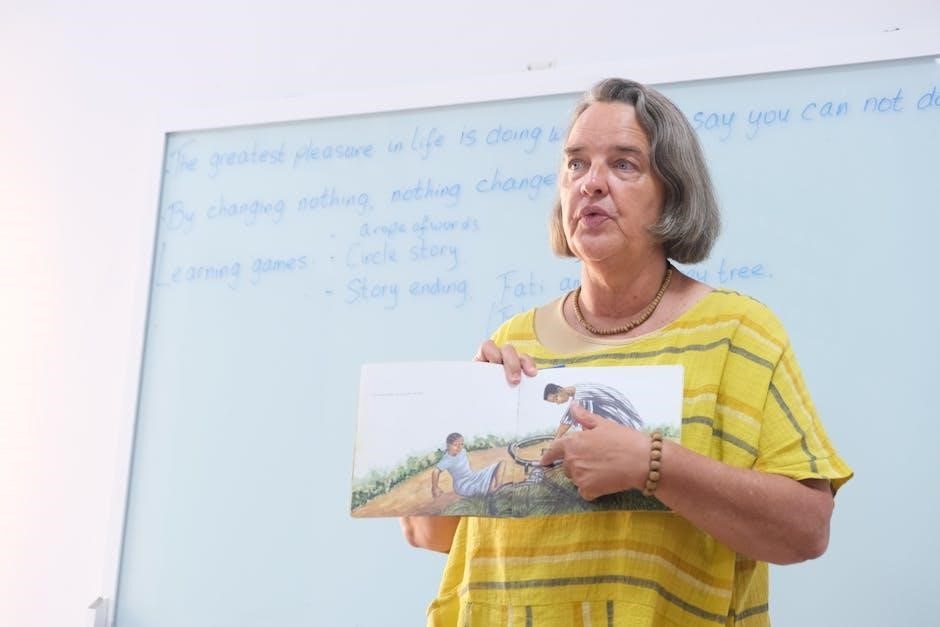
Facilitate comprehension discussions using targeted questions, encouraging students to share interpretations and evidence from the text. Reinforce understanding through activities like retelling or summarizing, solidifying key concepts. These post-reading steps deepen engagement and assess learning outcomes effectively.
A. Comprehension Discussion Questions
Pose open-ended questions prompting students to share interpretations and support answers with textual evidence. Encourage predictions, inferences, and connections to prior knowledge. Focus discussions on character motivations, plot development, and the author’s message, fostering critical thinking skills and deeper understanding.

B. Activities for Reinforcing Comprehension (e.g., retelling, summarizing)
Engage students with retelling activities, focusing on key events in sequential order. Implement summarizing exercises, requiring concise restatements of the main idea. Graphic organizers, like story maps, aid comprehension. Writing responses, connecting to the text, solidify understanding and promote recall.
VII. Independent Practice Activities
Foster autonomy through rereading familiar texts, building fluency and confidence. Implement word work, utilizing magnetic letters to explore word families and patterns. Connect activities to authentic reading and writing experiences, reinforcing skills. These tasks should closely mirror guided reading concepts.
A. Rereading Familiar Texts
Rereading builds fluency and solidifies comprehension of previously tackled texts. This practice boosts confidence and allows students to focus on expression and phrasing. It reinforces decoding skills and vocabulary, creating a stronger foundation for future reading challenges and independent practice.
B. Word Work Activities (e.g., magnetic letters, word families)
Engaging word work strengthens phonemic awareness and decoding skills. Activities like manipulating magnetic letters or exploring word families reinforce letter-sound correspondence. These hands-on experiences build a strong foundation for reading and spelling, connecting directly to foundational skills emphasized in guided reading.

VIII. Differentiation Strategies
Effective differentiation ensures all students access appropriately challenging texts. Adapting texts for varying reading levels is crucial, alongside providing tiered activities. This approach caters to individual needs, maximizing engagement and progress within the guided reading framework, fostering accelerated reading achievement outcomes.
A. Adapting Texts for Varying Reading Levels
Strategic text adaptation is key for diverse learners. This involves selecting texts at independent, instructional, or frustration levels based on running records. Modifying sentence structure or vocabulary can also bridge gaps, ensuring accessibility while maintaining the core meaning and supporting individual student growth.

B. Providing Tiered Activities

Tiered activities cater to varied skill levels within a group. Offer differentiated tasks – some focusing on decoding, others on comprehension, and still others on writing responses. This ensures all students are challenged appropriately, fostering engagement and maximizing learning potential during independent practice.
IX. Two-Part Lesson Plans: Decoding and Comprehension
Two-part lessons are ideal for late first or second graders. Day one prioritizes decoding fluency with the entire text. Day two focuses on rereading, deeper comprehension, and a related writing activity, adapting to student needs and group meeting frequency.
A. First Day: Focus on Decoding Fluency
The initial lesson centers entirely on decoding the text. Students read the book in its entirety, concentrating on accurate word recognition and building reading speed. Comprehension is secondary; the primary goal is establishing a solid foundation for fluent reading.
B. Second Day: Focus on Comprehension and Writing Response
Following the decoding focus, reread the text, shifting attention to deeper understanding. Engage students in discussions to explore the story’s meaning, then extend learning with a writing activity – a response that demonstrates comprehension and critical thinking skills.
X. Scheduling and Group Organization
Effective guided reading requires a well-planned schedule for small group work and organized materials for independent stations. Independent tasks should mirror authentic reading and writing, like rereading familiar texts or exploring word families with manipulatives, fostering continuous learning.
A. Creating a Rotation Schedule for Small Groups
A robust rotation schedule ensures all students receive targeted guided reading instruction. Carefully consider group needs and lesson durations when planning. This allows for focused small group time while others engage in meaningful independent work, maximizing learning opportunities for every student.
B. Organizing Materials for Independent Work Stations
Independent work stations should offer authentic reading and writing connections. Prepare materials like familiar texts for rereading or magnetic letters for word family exploration. Organized stations promote student autonomy and reinforce skills, allowing for continuous practice during rotation times.
XI. Connecting to CVC Levels and Foundational Skills
Grounding lessons in the 1st CVC level—letter-sounds, Fry high-frequency words, and decoding strategies—is crucial. This foundational approach supports emerging readers, building a strong base for fluency and comprehension. Consistent reinforcement of these skills accelerates reading progress effectively.
A. Reinforcing Letter-Sound Correspondence
Explicitly revisit letter-sound relationships during guided reading, particularly within CVC words. Manipulating magnetic letters allows students to actively explore and solidify these connections. This foundational skill directly impacts decoding abilities, fostering reading confidence and fluency for all learners.
B. Utilizing Fry High-Frequency Word Lists
Integrate Fry high-frequency words into guided reading lessons, as mastery boosts reading speed and comprehension. Activities could include word sorts, sentence building, or quick recall games. Consistent exposure and practice with these words are crucial for developing fluent readers.
XII. Year 6 Guided Reading: Identifying Text Types
Focus Year 6 lessons on identifying various text types and their unique features. Activities should support text type recognition, enabling students to analyze purpose and structure. Objectives center on understanding how authors craft texts for specific audiences and intended effects.
A. Objectives for Identifying Text Features
Students will learn to pinpoint key text features – headings, subheadings, bold text, and illustrations – understanding their purpose in conveying information. They’ll analyze how these elements contribute to overall meaning and author intent, enhancing comprehension skills and analytical abilities.
B. Activities to Support Text Type Recognition
Engage students with sorting exercises, categorizing texts as narratives, informative, or persuasive. Feature hunts for specific elements within each type will reinforce learning. Collaborative chart creation, detailing characteristics of each text type, solidifies understanding and analytical skills.
XIII. 30-45 Minute Lesson Plan for 1st Grade
This plan centers on independent reading within guided reading groups, tailored to individual student needs. Focus on decoding, fluency, and comprehension strategies. Activities include rereading familiar texts and targeted word work, fostering a supportive and engaging learning environment for young readers.
A. Independent Reading within Guided Reading Groups
Students engage with books selected at their individual reading levels, fostering a sense of ownership and promoting fluency. This allows for focused observation and targeted support from the teacher, addressing specific decoding or comprehension challenges as they arise during reading.
B. Focus on Individual Student Needs
Lessons are tailored to address each student’s unique strengths and areas for growth, whether it’s decoding, fluency, or comprehension. Frequent assessment informs instructional decisions, ensuring appropriate text selection and targeted strategies for maximizing individual reading achievement outcomes.
XIV. The Purpose and Goals of Guided Reading
Guided reading aims to match students with texts at their instructional level, fostering independence and accelerating reading progress. It’s about providing strategic support, enabling students to develop effective reading habits and ultimately, achieve significant gains in overall reading achievement outcomes.
A. Matching Students to Appropriate Text Levels
Effective guided reading hinges on carefully selecting texts aligned with each student’s capabilities. This ensures a balance between challenge and support, promoting growth without frustration. Accurate assessment, considering CVC levels and foundational skills, is crucial for optimal text-student pairings.
B. Accelerating Reading Achievement Outcomes
Guided reading, when implemented with a streamlined pathway, demonstrably boosts student progress. By focusing on foundational skills – like decoding and high-frequency words – and tailoring instruction, educators can expect to see significant gains in reading fluency and overall comprehension abilities.
XV. Evaluating Lesson Effectiveness
Assessing guided reading success requires observing student engagement and active participation during sessions. Analyzing student responses to comprehension questions, alongside reviewing their independent work samples, provides valuable insights into learning progress and informs future instructional adjustments.
A. Observing Student Engagement and Participation
Careful observation reveals if students are actively involved, contributing to discussions, and applying learned strategies. Note attentiveness, willingness to attempt challenges, and collaborative interactions within the group; these indicators reflect lesson effectiveness and individual progress.
B. Analyzing Student Responses and Work Samples
Detailed analysis of student responses during discussions and written work provides insights into comprehension levels and skill application. Examining accuracy, completeness, and reasoning demonstrates understanding, pinpointing areas needing further support or differentiated instruction for optimal growth.