
CBIS emerged from the need for efficient calculation, initially denoting humans performing computations, evolving to encompass modern digital tools for enhanced learning․
1․1 Defining CBIS: A Comprehensive Overview
Computer-Based Instructional Systems (CBIS) represent a dynamic intersection of pedagogical principles and technological capabilities, fundamentally altering traditional learning paradigms․ Initially, the term “computer” signified individuals adept at calculations – a role now automated․ Today, CBIS encompasses a broad spectrum of applications, from simple computer-assisted instruction to sophisticated intelligent tutoring systems․ These systems leverage hardware and software to deliver personalized, interactive learning experiences․
CBIS isn’t merely digitizing existing materials; it’s about restructuring content and delivery methods to capitalize on the unique strengths of computers․ This includes immediate feedback, adaptive learning paths, and the ability to simulate real-world scenarios․ The evolution reflects a shift from passive reception of information to active engagement and knowledge construction, mirroring the growing recognition of diverse learning styles and needs․ Effective CBIS design prioritizes user experience and accessibility, ensuring equitable access to quality education․
1․2 Historical Evolution of CBIS
The roots of CBIS trace back to the mid-20th century, initially with programmed instruction and mainframe computers aiding in basic skill practice․ Early iterations focused on drill-and-practice exercises, mirroring behaviorist learning theories․ The 1960s and 70s saw the development of Computer-Assisted Instruction (CAI), offering branching logic and individualized pacing, though limited by technology․
The advent of microcomputers in the 1980s broadened access and spurred innovation, leading to more interactive and multimedia-rich learning experiences․ The internet’s rise in the 1990s revolutionized CBIS, enabling widespread distribution of educational content and fostering collaborative learning․ Today, advancements in Artificial Intelligence (AI) and machine learning are driving the development of intelligent tutoring systems capable of adapting to individual student needs, marking a significant leap from the initial “computer” as a human calculator․

Core Components of a CBIS
A CBIS fundamentally integrates hardware, software, and instructional content to deliver personalized learning, mirroring the evolution from calculation to education․
2․1 Hardware Infrastructure
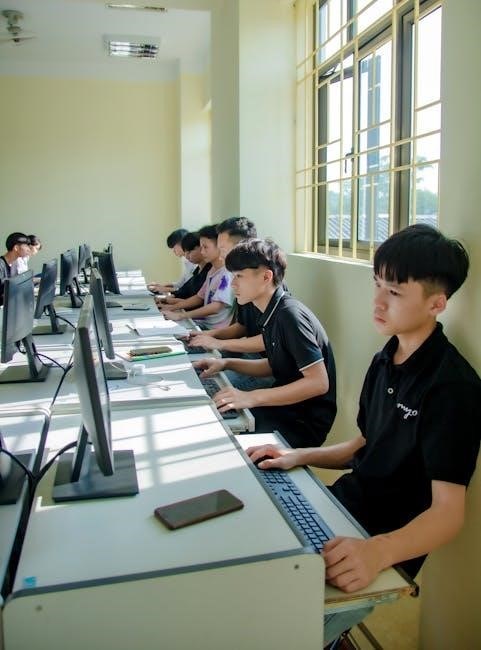
The foundational hardware of a Computer-Based Instructional System (CBIS) encompasses a diverse range of components, initially rooted in the mechanical devices used for computation․ Today, this infrastructure centers around computers – desktops, laptops, tablets, and servers – providing the processing power and storage necessary for delivering instructional content․
Essential peripherals include display units (monitors, projectors) for visual presentation, input devices (keyboards, mice, touchscreens) for user interaction, and networking equipment (routers, switches, Wi-Fi access points) to facilitate connectivity and access to online resources․ Furthermore, audio output devices like speakers or headphones are crucial for multimedia learning experiences․
The scalability of the hardware infrastructure is paramount, allowing CBIS to accommodate varying numbers of users and evolving technological demands․ Robust and reliable hardware ensures seamless delivery of instruction and minimizes disruptions to the learning process, building upon the historical progression from manual calculation to sophisticated digital systems․
2․2 Software Applications & Platforms
Software forms the dynamic core of any Computer-Based Instructional System (CBIS), translating hardware capabilities into interactive learning experiences․ Operating systems, like Windows, macOS, or ChromeOS, provide the foundational environment for running educational applications․ Learning Management Systems (LMS) – such as Google Classroom or Moodle – serve as central hubs for content delivery, assignment management, and student tracking․
Specialized software applications encompass a broad spectrum, including authoring tools for creating instructional materials, multimedia players for delivering rich content, and communication platforms for fostering collaboration․ Web browsers, like Chrome, are essential for accessing online resources and web-based learning platforms;
The integration of these software components, mirroring the evolution from manual computation to digital tools, is crucial for creating a cohesive and effective CBIS․ Ensuring compatibility, user-friendliness, and accessibility are key considerations in software selection and implementation․
2․3 Instructional Content & Materials
The heart of a Computer-Based Instructional System (CBIS) lies in its instructional content – the information, skills, and knowledge conveyed to learners․ This encompasses a diverse range of materials, extending far beyond traditional textbooks․ Digital textbooks, interactive simulations, and multimedia presentations are now commonplace, offering dynamic and engaging learning experiences․
Content can be delivered through various formats, including text, images, audio, and video, catering to diverse learning styles; Online resources, such as articles, websites, and digital libraries, expand access to information․ The quality of content is paramount; it must be accurate, relevant, and aligned with learning objectives․
Effective CBIS content leverages the capabilities of digital technology to enhance understanding and retention, mirroring the shift from calculation to comprehensive knowledge dissemination․
Pedagogical Approaches Integrated into CBIS
CBIS facilitates diverse teaching methods, evolving from basic computation to incorporating behaviorism, cognitivism, and constructivism for optimal learning outcomes․
3․1 Behaviorism and CBIS
Behaviorism, a foundational learning theory, significantly influences Computer-Based Instructional Systems (CBIS) design․ Rooted in the principles of stimulus-response, CBIS utilizing a behaviorist approach emphasize programmed instruction, breaking down complex tasks into smaller, manageable steps․
These systems often employ immediate feedback mechanisms – positive reinforcement for correct answers and corrective feedback for errors – to shape student behavior․ Drill-and-practice exercises, a hallmark of behaviorist CBIS, are designed to promote fluency and mastery through repetition․
The focus is on observable changes in behavior rather than internal mental processes․ Early CBIS heavily relied on this methodology, offering structured learning paths with clearly defined objectives and rewards․ While modern CBIS integrate other pedagogical approaches, behaviorist principles remain relevant in specific contexts, particularly for skill acquisition and foundational knowledge reinforcement․
3․2 Cognitivism and CBIS
Cognitivism, shifting focus from observable behavior to internal mental processes, profoundly impacts CBIS design․ Unlike behaviorism’s stimulus-response model, cognitivism emphasizes how learners actively construct knowledge, processing information through memory, attention, and problem-solving․ CBIS reflecting this theory prioritize meaningful learning and knowledge representation․
These systems often incorporate strategies like advanced organizers, concept mapping, and analogies to help students connect new information to existing schemas․ Interactive simulations and problem-solving scenarios encourage active participation and cognitive engagement․
CBIS designed with a cognitivist perspective aim to facilitate understanding, not just memorization, by providing opportunities for elaboration, organization, and retrieval of information․ The goal is to empower learners to become self-regulated and strategic thinkers․
3․3 Constructivism and CBIS
Constructivism posits that learners build knowledge through experience and interaction with their environment, rejecting the notion of passively receiving information․ CBIS aligned with this philosophy emphasize authentic tasks, collaborative learning, and learner control․ These systems aren’t simply delivery mechanisms; they’re environments for knowledge construction․
Features like virtual labs, collaborative projects, and open-ended simulations allow students to explore, experiment, and create their own understanding․ Scaffolding, providing temporary support, is crucial, gradually fading as learners gain competence;
CBIS supporting constructivism prioritize student agency, encouraging self-directed learning and reflection․ The role of the instructor shifts from lecturer to facilitator, guiding students through the learning process and fostering critical thinking․

Benefits of Utilizing CBIS in Education
CBIS offers personalized learning, increased engagement, and enhanced accessibility, transforming education by adapting to individual needs and fostering dynamic interaction․
4․1 Personalized Learning Experiences
Computer-Based Instructional Systems (CBIS) revolutionize education through truly personalized learning experiences․ Unlike traditional, one-size-fits-all approaches, CBIS adapts to each student’s unique pace, learning style, and knowledge gaps․
Through adaptive algorithms and data analytics, CBIS identifies areas where a student excels or struggles, tailoring content and difficulty levels accordingly․ This ensures students are consistently challenged, yet not overwhelmed․
Furthermore, CBIS allows for customized learning paths, enabling students to focus on topics most relevant to their interests and career goals․ This fosters intrinsic motivation and a deeper understanding of the material․ The system’s ability to provide immediate feedback and targeted support further enhances the personalized learning journey, maximizing individual student potential․
4․2 Increased Student Engagement
CBIS significantly boosts student engagement by moving beyond passive learning methods․ Interactive simulations, educational games, and multimedia content captivate students’ attention and foster a more active role in their education․

The dynamic nature of CBIS contrasts sharply with traditional lectures, offering a stimulating environment that caters to diverse learning preferences․ Features like immediate feedback, progress tracking, and gamified elements – such as points, badges, and leaderboards – provide continuous motivation․
Moreover, CBIS often incorporates collaborative tools, enabling students to interact with peers and instructors in meaningful ways․ This collaborative aspect enhances social learning and promotes a sense of community, ultimately leading to greater engagement and improved learning outcomes․
4․3 Enhanced Accessibility & Flexibility
CBIS dramatically expands access to education, breaking down geographical and temporal barriers․ Students can learn at their own pace, revisiting materials as needed, and accessing courses from virtually anywhere with an internet connection․
This flexibility is particularly beneficial for students with disabilities, those in remote locations, or individuals with demanding schedules․ CBIS often incorporates features like adjustable font sizes, screen readers, and closed captions, ensuring inclusivity․
Furthermore, the availability of online resources and learning materials 24/7 empowers students to take control of their learning journey․ This self-directed approach fosters independence and promotes lifelong learning skills, making education more accessible and adaptable to individual needs․

Types of CBIS Applications
CBIS applications range from intelligent tutoring and computer-assisted instruction to engaging educational games and simulations, fostering diverse learning experiences․
5․1 Intelligent Tutoring Systems (ITS)
Intelligent Tutoring Systems (ITS) represent a sophisticated application of CBIS, moving beyond simple presentation of material to provide personalized guidance․ These systems utilize artificial intelligence and machine learning to assess a student’s knowledge, identify learning gaps, and adapt the instructional content accordingly․ Unlike traditional tutoring, ITS can offer consistent, individualized support at any time, scaling educational resources effectively․
ITS often employ cognitive models to simulate a student’s thought processes, allowing the system to predict potential errors and offer targeted interventions․ They dynamically adjust the difficulty level, provide hints, and offer feedback tailored to the student’s specific needs․ This adaptive nature is crucial for maximizing learning outcomes․ Furthermore, ITS can track student progress in detail, providing valuable data for educators to refine their teaching strategies and improve the overall learning experience․ The Kimi chatbot exemplifies this intelligent adaptation, offering a surprisingly human-like and useful interaction․
5․2 Computer-Assisted Instruction (CAI)
Computer-Assisted Instruction (CAI) represents an earlier, yet still valuable, form of CBIS, focusing on delivering structured lessons and practice exercises via computer․ CAI typically involves pre-programmed content, often presented in a question-and-answer format, allowing students to work through material at their own pace․ While less adaptive than Intelligent Tutoring Systems, CAI provides a cost-effective way to supplement traditional classroom instruction and reinforce key concepts․
Historically, CAI played a significant role in introducing computers into education, laying the groundwork for more advanced systems․ It often includes immediate feedback on student responses, helping them identify and correct errors․ Though sometimes perceived as less engaging than newer technologies, CAI remains relevant for drill-and-practice activities and foundational skill development․ The evolution from human “computers” performing calculations to CAI demonstrates the changing role of technology in learning, mirroring the advancements seen in tools like Kimi․
5․3 Educational Games & Simulations
Educational games and simulations represent a highly engaging application of CBIS, leveraging the motivational power of play to facilitate learning․ These systems move beyond rote memorization, offering immersive experiences where students can apply knowledge in realistic or fantastical contexts․ Simulations, in particular, allow exploration of complex systems and scenarios that would be impractical or dangerous to replicate in a traditional classroom․
The effectiveness of these tools stems from their ability to foster active learning and problem-solving skills․ Like the sophisticated AI chatbot Kimi, which offers a “human touch,” well-designed educational games provide personalized challenges and feedback․ From historical recreations to scientific experiments, these applications cater to diverse learning styles and promote deeper understanding․ They represent a significant shift from the early days of “computer” as a human calculator, now embodying dynamic learning environments․

Assessment and Evaluation within CBIS
CBIS facilitates data-driven insights into student performance, moving beyond traditional methods to offer formative and summative evaluations for optimized learning․
6․1 Formative Assessment Tools
Formative assessment tools within CBIS are crucial for monitoring student learning during the instructional process, providing immediate feedback to both learners and instructors․ These tools move beyond simple quizzes, incorporating interactive elements like drag-and-drop activities, simulations, and branching scenarios that adapt to student responses․
CBIS allows for the implementation of real-time polling, quick checks for understanding, and automated feedback mechanisms․ This continuous assessment loop enables instructors to identify areas where students struggle and adjust their teaching strategies accordingly․ Furthermore, data collected from these tools provides valuable insights into individual student learning patterns, allowing for personalized interventions․
The integration of learning analytics further enhances formative assessment, providing visualizations of student progress and identifying common misconceptions․ These tools empower students to take ownership of their learning, fostering self-reflection and promoting a growth mindset․ Ultimately, formative assessment within CBIS shifts the focus from simply measuring learning to actively supporting and improving it․
6․2 Summative Assessment Strategies
Summative assessments within CBIS evaluate student learning at the conclusion of an instructional unit or course, providing a comprehensive measure of achievement․ While traditional methods like multiple-choice exams can be digitized, CBIS enables more innovative and authentic assessment strategies․ These include project-based assessments, simulations requiring complex problem-solving, and portfolio submissions showcasing student work over time․
Automated grading systems can efficiently score objective assessments, freeing up instructor time for providing detailed feedback on more complex assignments․ CBIS also facilitates the use of plagiarism detection software, ensuring academic integrity․ Furthermore, the secure online environment minimizes the potential for cheating and ensures fair evaluation․
Data analytics play a vital role in analyzing summative assessment results, identifying trends in student performance and informing curriculum improvements․ The ability to track student progress over time allows for longitudinal analysis and the identification of areas where the CBIS itself may need refinement․
6․3 Data Analytics & Learning Analytics
Data analytics and learning analytics are pivotal components of modern CBIS, transforming raw data generated by student interactions into actionable insights․ These analytics extend beyond simple scoring, tracking student progress, identifying learning gaps, and predicting future performance․ CBIS platforms collect data on various aspects, including time spent on tasks, error patterns, and resource utilization․
Learning analytics algorithms can personalize the learning experience by adapting content difficulty and providing targeted interventions․ Instructors gain valuable insights into class-wide trends, enabling them to refine their teaching strategies and address common misconceptions; Furthermore, data visualization tools present complex information in an easily understandable format․
Ethical considerations are paramount; data privacy must be protected, and analytics should be used to support, not supplant, human judgment․ The ultimate goal is to leverage data to optimize learning outcomes and create a more effective and equitable educational environment․

Challenges and Limitations of CBIS Implementation
Implementing CBIS faces hurdles like cost, infrastructure needs, teacher training gaps, and ensuring equitable access, bridging the digital divide for all learners․
7․1 Cost and Infrastructure Requirements
The initial investment for CBIS can be substantial, encompassing hardware – computers, tablets, interactive whiteboards – and the necessary network infrastructure to support them․ Beyond the upfront costs, ongoing expenses include software licenses, regular hardware upgrades, technical support, and maintaining reliable internet connectivity․ Schools in under-resourced communities often struggle to meet these demands, exacerbating existing inequalities․
Furthermore, robust infrastructure is crucial; simply providing devices isn’t enough․ Reliable power supplies, sufficient bandwidth, and adequate technical personnel are essential for smooth operation․ The total cost of ownership extends beyond the purchase price, demanding careful budgeting and long-term financial planning․ Without adequate funding and infrastructure, the potential benefits of CBIS remain unrealized, creating a barrier to effective implementation․
7․2 Teacher Training and Professional Development
Successful CBIS implementation hinges on adequately prepared educators․ Teachers require comprehensive training not only on the technical aspects of using the systems – software, hardware, troubleshooting – but, crucially, on integrating these tools effectively into their pedagogical practices․ This means moving beyond simply replicating traditional methods digitally and embracing new instructional strategies facilitated by CBIS․
Professional development must focus on how to leverage CBIS for personalized learning, data-driven instruction, and fostering student engagement․ Ongoing support and mentorship are vital, as technology evolves rapidly․ Without sufficient training, teachers may feel overwhelmed or underprepared, leading to underutilization or ineffective implementation of CBIS, hindering its potential impact on student learning outcomes․
7․3 Digital Divide and Equity Concerns
CBIS implementation can exacerbate existing inequalities if not carefully addressed․ The “digital divide” – unequal access to technology and reliable internet connectivity – presents a significant barrier for many students, particularly those from low-income families or rural areas; Simply introducing CBIS without ensuring equitable access creates a two-tiered system, disadvantaging those already facing systemic challenges․
Furthermore, disparities in digital literacy skills among students and teachers can widen the achievement gap․ Addressing these concerns requires proactive measures, including providing affordable internet access, loaning devices, and offering targeted digital literacy training․ Equity demands that all students have the opportunity to benefit from CBIS, regardless of their socioeconomic background or geographic location․

Future Trends in CBIS
AI, VR/AR, and adaptive learning are poised to revolutionize CBIS, offering personalized, immersive, and responsive educational experiences for all learners․
8․1 Artificial Intelligence (AI) and Machine Learning
The integration of Artificial Intelligence (AI) and Machine Learning (ML) represents a pivotal shift in CBIS capabilities․ AI algorithms can analyze student performance data to personalize learning paths, adapting content difficulty and delivery methods to individual needs․ ML enables systems to learn from interactions, continuously improving instructional strategies and identifying areas where students struggle․ This dynamic adaptation surpasses traditional, static CBIS approaches․
Furthermore, AI-powered chatbots and virtual assistants can provide immediate feedback and support, mimicking the benefits of one-on-one tutoring․ Automated content generation, powered by AI, allows for the creation of diverse and engaging learning materials․ Predictive analytics, utilizing ML, can identify students at risk of falling behind, enabling proactive interventions․ The future of CBIS is inextricably linked to the advancement and responsible implementation of AI and ML technologies, promising a more effective and equitable learning landscape․
8․2 Virtual Reality (VR) and Augmented Reality (AR)
Virtual Reality (VR) and Augmented Reality (AR) are poised to revolutionize CBIS by offering immersive and interactive learning experiences․ VR creates fully simulated environments, allowing students to explore historical sites, dissect virtual organisms, or practice complex procedures in a safe and controlled setting․ This experiential learning fosters deeper understanding and retention compared to traditional methods․
AR, conversely, overlays digital information onto the real world, enhancing existing learning materials․ Imagine studying anatomy with a 3D model projected onto a textbook or learning history by virtually “visiting” ancient Rome․ These technologies cater to diverse learning styles and increase student engagement․ While infrastructure costs and content development remain challenges, the potential of VR and AR to transform CBIS is undeniable, promising more captivating and effective educational tools․
8․3 Adaptive Learning Technologies
Adaptive learning technologies represent a significant advancement within CBIS, tailoring educational content and pace to individual student needs․ Utilizing algorithms and data analytics, these systems assess a student’s understanding in real-time, identifying knowledge gaps and adjusting the difficulty level accordingly․ This personalized approach ensures students are consistently challenged without being overwhelmed, maximizing their learning potential․
Unlike traditional, one-size-fits-all instruction, adaptive learning provides customized pathways, offering targeted support and remediation where needed․ This fosters a more efficient and effective learning experience, boosting student confidence and motivation․ The integration of Artificial Intelligence (AI) further enhances these systems, enabling more sophisticated analysis and personalized recommendations, ultimately shaping the future of CBIS․